Patek Philippe Luxury Watches: Why Serious Collectors Treat Them as a Category of Their Own
There is a short list of objects that people willingly pass down through generations with the same reverence as real estate or fine art. A well-chosen Patek Philippe sits on that list without much debate. That is not marketing. It is the natural result of over 180 years of movement engineering, controlled production, and a secondary market that has repeatedly outperformed traditional investment assets.
Collectors who take horology seriously tend to make a clear distinction between watches that are excellent and watches that occupy a tier above the conversation entirely. Patek Philippe lands in the second group, almost unanimously. Understanding why that is requires looking at the full picture: what goes into the watches, how they behave on the secondary market, and what owning one actually means over time.
The Manufacture Reality: What “In-House” Actually Means Here
Many watch brands describe themselves as manufacturers. Far fewer meet the standard Patek Philippe has maintained for decades. The Geneva-based maison produces the vast majority of its movements internally, from raw brass plates to finished calibres, within the same facilities where watchmakers have worked for generations.
The Patek Philippe Seal, introduced in 2009 to replace the Geneva Seal, sets stricter finishing and precision standards than any external certification currently requires. Every movement must pass tests covering accuracy, winding efficiency, and shock resistance before leaving the manufacture. These are not marketing claims. They are documented standards that independent watchmakers and journalists, including those at Hodinkee and the Financial Times, have covered in detail.
What this produces in practice is a movement that can be serviced 50 years from now by any competent watchmaker, because the quality of the parts and the documentation behind them is built to endure.
The References That Define Collector Culture
Not every Patek Philippe carries the same weight in collector circles. Certain references have become cultural benchmarks, both for what they represent technically and for how they perform at auction.
The Calatrava (Reference 5196 and beyond)
The Calatrava line is the foundation of the brand. Clean, unadorned dials, slim cases, and extraordinary movement finishing define the series. The Reference 5196 remains one of the most pure expressions of dress watch design produced by anyone. For first-time Patek buyers who want something they can wear daily without drawing attention, the Calatrava is the natural starting point.
The Nautilus (Reference 5711 and 5726)
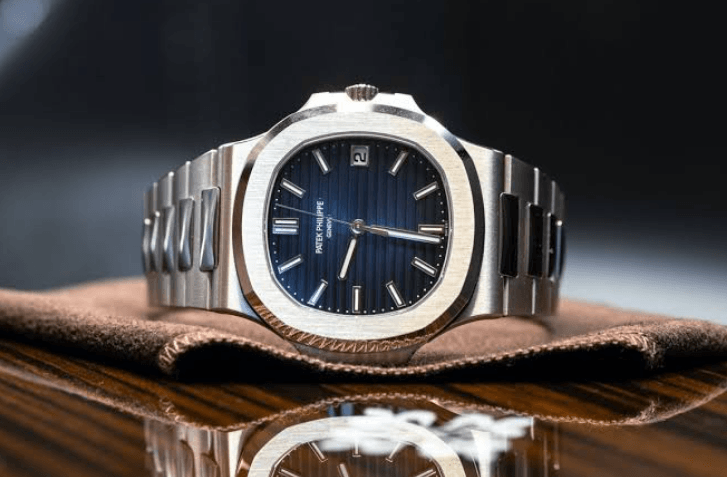
Few watch launches have had the cultural longevity of the Nautilus. Designed by Gérald Genta in 1976, it was originally intended to prove that a luxury stainless steel sports watch could command a premium price. It has since become one of the most sought-after references in the world. The discontinued Reference 5711 regularly trades at multiples of its original retail price. The annual production figure for the entire Nautilus line sits in the low thousands, which goes some way toward explaining the demand.
The Aquanaut (Reference 5167 and 5968)
The Aquanaut is the Nautilus for a slightly younger buyer, or at least a buyer less attached to the original. Launched in 1997, it shares the sporty DNA but carries its own distinct octagonal bezel and rubber strap combination. The 5968A, with its chronograph function and steel case, is particularly popular on the secondary market right now.
Grand Complications
This is where Patek Philippe separates from every other manufacturer in practical terms. Grand complications, particularly perpetual calendars, minute repeaters, and tourbillons, require thousands of components and years of development. The Reference 5270 perpetual calendar chronograph and the Reference 5531R world time minute repeater are not just watches. They are mechanical arguments for why the craft still matters in an era when a phone does the same job more accurately.
Secondary Market Behaviour: How Patek Philippe Compares
The pre-owned luxury watch market is not uniform. Some brands lose value immediately after purchase. Others hold steady. A small number appreciate.
Patek Philippe sits in its own column. According to data tracked by platforms like WatchCharts and reporting in outlets like Bloomberg, Patek Philippe pieces have historically shown stronger average value retention than almost any comparable luxury brand. The key references, especially Nautilus and Aquanaut models in steel, have shown appreciation rates that rival or exceed traditional collectibles.
There are a few reasons for this. Production volume is deliberately restricted. The brand does not chase market share. Authorised dealer waitlists for the most desirable references stretch years, which pushes buyers toward the secondary market and sustains prices. And the watches themselves are built to be maintained indefinitely, which eliminates the depreciation you see with technology-driven goods.
For collectors who treat watches as a store of value alongside their aesthetic enjoyment, this matters considerably.
Buying on the Secondary Market: What to Know Before You Spend
Given how limited authorised dealer access is for the most coveted references, the secondary market is where most serious transactions happen. That creates real risk if you are not careful.
A few things worth understanding before committing to a purchase:
- Dial originality matters enormously. Refinished dials, replaced indices, or non-original hands are common on older pieces and can reduce value by 30 to 50 percent compared to an all-original example.
- Box and papers are not optional for investment-grade pieces. Complete sets (original box, outer box, certificates, and service booklets) consistently command premiums on the secondary market.
- Service history tells a story. A watch that has been serviced by Patek Philippe directly, with documentation, carries more confidence than one that has passed through unknown hands.
- Authentication is non-negotiable. Serial numbers, case proportions, movement finishing, and dial printing are all points of inspection. Counterfeits exist at every price point, including high ones.
Sourcing from a dealer who specialises in authenticated pre-owned luxury watches significantly reduces this risk. Wrist Aficionado, which carries an extensive selection of authenticated pieces across multiple boutique locations, is one example of the kind of specialist operation that serves this market seriously. Every piece in their inventory goes through authentication before it reaches a buyer.
The Generational Argument: Why “You Never Actually Own One” Rings True
Patek Philippe’s long-running marketing line, that you never actually own one, you merely look after it for the next generation, is not just a slogan. It reflects something real about how the watches are designed and how they are treated by owners.
The mechanical movements used in Patek Philippe luxury watches are built to be serviced and maintained in perpetuity. The brand archives documentation for every reference it has ever produced. Parts can be made again if necessary. These are not watches that become obsolete.
For collectors, this creates a particular relationship with the object. It is not a purchase. It is closer to custodianship. And for families who understand watches, passing down a Patek Philippe carries the same emotional weight as passing down a significant piece of jewellery or a painting.
Where to Research and Buy Responsibly
Collector forums like Timezone and Watchuseek carry decades of documented reference knowledge. Publications like Revolution and Hodinkee offer editorial-level reviews of specific references. For those entering the market without a deep background, taking time to read widely before spending significantly is always the right approach.
When you are ready to transact, working with a vetted specialist matters. Browsing the Patek Philippe collection at a respected pre-owned dealer is a practical way to understand current market availability and pricing without the opacity that often surrounds private sales.
Key Takeaways
- Patek Philippe’s in-house manufacture standards, particularly the Patek Philippe Seal, set a benchmark that few competitors reach
- Key references like the Nautilus 5711, Aquanaut 5968A, and Calatrava 5196 have distinct collector profiles and suit different buyers
- Secondary market performance for core Patek references has historically outperformed other luxury watch brands in value retention
- Dial originality, box and papers, and service documentation are critical factors in any serious purchase decision
- Authentication from a qualified specialist is essential before spending at this level
Frequently Asked Questions
Why are Patek Philippe watches so expensive compared to other Swiss luxury brands? The price reflects a combination of genuinely in-house manufacturing, extremely limited production volumes, multi-year development cycles for complex movements, and sustained secondary market demand. It is also worth noting that the most expensive Patek Philippe pieces, grand complications especially, require individual watchmakers to spend thousands of hours on a single movement.
Is a Patek Philippe Nautilus a good investment? Historically, yes, though past market performance does not guarantee future returns. Steel Nautilus references, particularly the discontinued 5711, have shown consistent appreciation on the secondary market. That said, buying purely for investment without caring about the watch itself is a risky strategy in any collectibles market.
What is the difference between the Nautilus and the Aquanaut? Both are sports watches from the same manufacturer, but they have distinct aesthetics and histories. The Nautilus is older, designed by Gérald Genta in 1976, and carries more prestige in collector circles. The Aquanaut, launched in 1997, has a slightly more casual feel and tends to attract a younger buyer. Neither is a compromise. They are simply different expressions of the same philosophy.
How do I verify that a pre-owned Patek Philippe is authentic? Authentication involves examining the movement through the caseback, checking serial numbers against the certificate, inspecting dial printing under magnification, and verifying case proportions against documented specifications. For most buyers, the safest route is purchasing from a dealer who performs professional authentication before sale. This is not a process to skip, regardless of how trustworthy a private seller appears.
Where can I find pre-owned Patek Philippe watches with verified authenticity? Specialist pre-owned dealers who focus specifically on high-end references are the most reliable option. Wrist Aficionado operates boutiques in New York, Miami, and Beverly Hills, with a fully authenticated inventory that spans the most significant Patek references across vintage and contemporary pieces.
See also: Why Stretch Film Manufacturers Matter in Modern Packaging Industries
Conclusion
Patek Philippe holds its position at the top of the collector hierarchy for reasons that are structural, not just reputational. The manufacturing standards are real. The production constraints are real. The secondary market performance is documented. And the design philosophy, particularly the commitment to building watches that can be passed down across generations, gives ownership a meaning that most goods simply cannot replicate.
For collectors who are serious about building a meaningful watch collection, understanding why Patek Philippe occupies a different category entirely is not an academic exercise. It is the foundation of making better decisions about what to buy, when to buy it, and how to look after it once you do.