
What to Look For When Buying a Cold Plunge in 2026
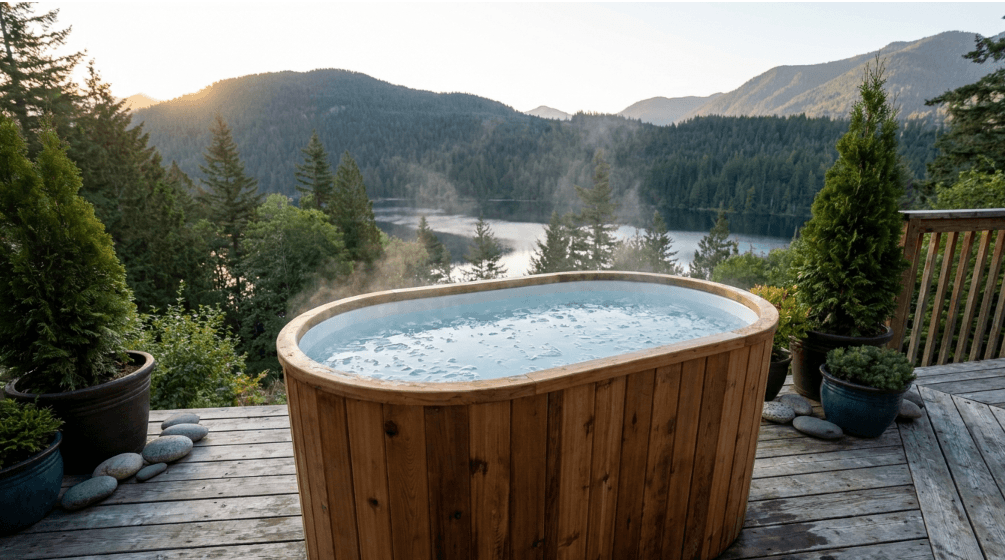
The features that matter most when buying a cold plunge are chiller capacity matched to tub gallons, a filtration and sanitizing system sized for the tub’s volume rather than a generic pool product, shell material and insulation, and total installed cost rather than the unit’s sticker price alone. A compact single-person tub with an adequate chiller typically runs $2,500 to $5,000, while a larger two-person unit with stronger filtration and insulation lands between $5,000 and $10,000 installed. Buyers who skip the chiller-to-gallon check most often end up with a tub that struggles to hold temperature once the weather warms up.
How Much Chiller Capacity Does the Tub Actually Need?
Chiller output is usually rated in horsepower or BTU, and the right size depends on tub volume and ambient conditions, not just the advertised low temperature on the box. A chiller that can technically reach 39 degrees in an empty tub on a cool day may struggle to hold that temperature in a full 300-gallon tub sitting in direct summer sun. Reputable manufacturers publish a gallons-to-horsepower guideline, and it is worth asking directly rather than assuming a listed “reaches 39°F” claim applies under real conditions. Most home users are comfortable with a target range of 39 to 55 degrees Fahrenheit, and a properly sized chiller should hold the low end of that range consistently, not just touch it briefly after hours of running.
What Filtration and Sanitizing Setup Should You Expect?
A home cold plunge needs filtration sized for its actual gallons, typically a cartridge filter rated for the tub’s flow rate, paired with a sanitizing method: ozone, UV, or a low-dose chlorine or bromine system built for spa-sized volumes rather than a pool. Ozone and UV systems reduce how much hand-dosed chemical is needed and tend to be gentler on skin and any wood trim, though they usually add to upfront cost. A simpler chlorine or bromine system costs less initially and is easier to service without specialized parts, but it requires more consistent manual attention to stay balanced. Neither approach is wrong; the mistake is buying a tub with no sanitizing system at all and assuming the filter alone will keep water safe between fills.
Does Shell Material and Insulation Actually Matter?
Shells generally fall into three categories: wood-clad tubs with a plastic or stainless liner, molded acrylic or fiberglass tubs, and stainless steel tubs. Wood-clad models tend to look the most at home in a backyard setting and insulate reasonably well when properly built, while acrylic and stainless units are typically easier to keep clean and more resistant to UV fading outdoors. Insulation thickness in the tub walls and lid directly affects how hard the chiller has to work and how much it costs to run monthly; a poorly insulated tub with a lid that does not seal well can lose several degrees overnight, forcing the chiller to recover that loss every morning. Ask specifically about wall and lid insulation rather than assuming a nice-looking exterior means the tub retains cold efficiently.
What Does “Installed Cost” Really Include?
The unit price on a product page rarely covers everything. A compact chiller-equipped tub might list for $2,800, but electrical work for a dedicated circuit if the chiller draws enough amps, a level pad, and drain plumbing can add $500 to $2,000 depending on your existing setup. Comparing a few manufacturers side by side, including Sweat Decks, against listed unit prices helps establish a realistic range before assuming the first number you see is the final cost. It is worth asking any retailer directly whether their listed price includes the chiller, filtration, and a cover, since some competitively priced tubs turn out to be shells only, with the functional components sold separately.
What Does the Evidence Actually Support?
Cold water immersion has a real, if modest, research base behind it. A 2025 systematic review and meta-analysis in PLoS One pooled multiple trials and found cold-water immersion associated with measurable improvements in wellbeing and recovery markers, though the effect sizes were generally modest rather than dramatic. A 2023 meta-analysis in Frontiers in Physiology found post-exercise cold water immersion associated with reduced perceived fatigue and some improvement in subsequent performance. A 2012 Cochrane review found cold-water immersion reduced muscle soreness after exercise compared with passive rest, while noting the certainty of that evidence was low to moderate. It is also worth knowing that some research suggests cold exposure immediately after resistance training may blunt strength and hypertrophy gains, so plunging right after a lifting session is not automatically the optimal timing for everyone.
What Warranty and Support Should You Expect?
Chiller warranties vary more than tub-shell warranties, and the chiller is the component most likely to need service over the tub’s lifetime. Look for at least one year on the compressor and refrigeration components, with two years or more common among manufacturers confident in their build quality. Shell warranties, covering the tub structure itself against cracking or structural defects, often run longer, sometimes five years or more, since the shell has no moving parts to wear out. Ask specifically whether the warranty covers parts only or parts and labor, since a parts-only warranty on a chiller still leaves you paying a technician’s time for any repair. A manufacturer that cannot state warranty terms clearly on its product page, or that only offers support through a general contact form with no phone number, is worth treating with some caution compared with one that publishes clear terms upfront.
Should You Buy New or Consider a Used Unit?
A used cold plunge can save real money, often 30 to 50 percent off a comparable new unit, but the chiller’s condition is the main variable to scrutinize. Ask for the chiller’s age, any service history, and whether it still holds its rated low temperature under a full load, since a compressor nearing the end of its working life is the most expensive thing to discover after purchase. A tub shell with no active leaks and reasonable cosmetic wear is generally a safer bet used than the chiller is, since shells have fewer failure points. For buyers without the technical background to evaluate a used chiller’s condition, a new unit with a stated warranty removes that guesswork, even at a higher upfront price.
Frequently Asked Questions
What temperature range should a home cold plunge chiller reach? Most chillers are built to hold water between 39 and 55 degrees Fahrenheit. Check the chiller’s rated capacity against the tub’s actual gallons, not just the advertised low temperature.
Do I need ozone or UV sanitizing, or is chlorine enough? Either works. Ozone and UV reduce hand-dosed chemical use and can be gentler on skin, while chlorine or bromine systems cost less upfront and are simpler to service.
How many gallons does a typical home cold plunge hold? Compact tubs hold 100 to 130 gallons; larger units run 200 to 400 gallons. More gallons holds temperature more stably but needs a bigger, pricier chiller.
Is cold water immersion actually backed by research? Yes, though the associations found are generally modest. It’s reasonable evidence to buy on, but claims of guaranteed fat loss or disease prevention go beyond what current studies support.
References
- Effects of cold-water immersion on health and wellbeing: A systematic review and meta-analysis, PLoS One, 2025
- Effects of cold water immersion after exercise on fatigue recovery and exercise performance: meta analysis, Frontiers in Physiology, 2023
- Cold-water immersion (cryotherapy) for preventing and treating muscle soreness after exercise, Cochrane Database of Systematic Reviews, 2012